
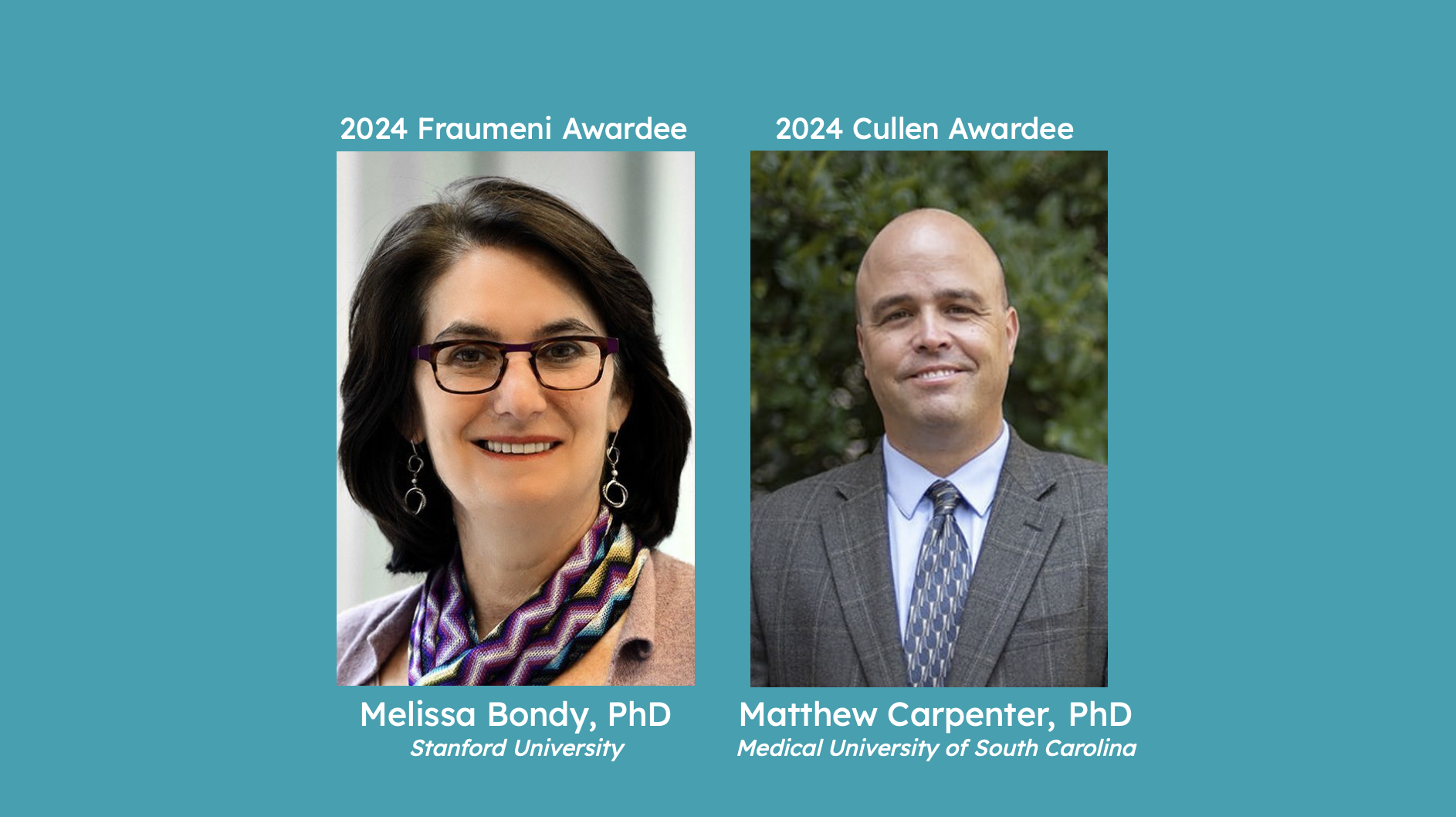
2024 Fraumeni & Cullen Awards
Joseph F. Fraumeni, Jr., Distinguished Achievement Award
The ASPO Joseph F. Fraumeni, Jr. Distinguished Achievement Award is extended annually to an outstanding scientist in the area of preventive oncology, cancer control, and/or cancer prevention.
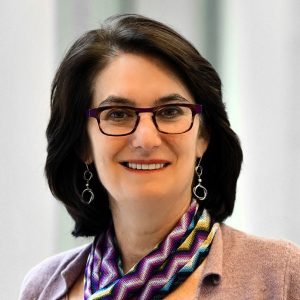 We are thrilled to share that the 2024 Fraumeni Award recipient is Melissa Bondy, Ph.D., of Stanford University! Dr. Bondy earned a Ph.D. in epidemiology from the University of Texas School of Public Health. She then dedicated nearly three decades of her career to the University of Texas MD Anderson Cancer Center and the Baylor College of Medicine, serving as Director of the Childhood Cancer Epidemiology and Prevention Center- a joint center of Baylor College of Medicine, MD Anderson Cancer Center, and Texas Children’s Hospital. Later, she became the Associate Director of Cancer Prevention Sciences at Baylor College of Medicine’s Dan L. Duncan Cancer Center.
In addition to her dedicated service in Texas, Dr. Bondy served as the inaugural chair of the Department of Epidemiology and Population Health at Stanford School of Medicine, the Associate Director for Population Sciences at the Stanford Cancer Institute, and the Stanford Medicine Discovery Professor. Dr. Bondy’s research is primarily regarding genetic and molecular epidemiology, focusing on the roles of heredity and genetic susceptibility in the etiology of cancer and outcomes. She is globally regarded as a leader in worldwide research efforts aimed at understanding heredity patterns of glioma, a deadly brain cancer.
She currently directs an international consortium aimed at identifying genes in familial glioma, leads studies on the genetic predictors of outcome in glioma, and is recognized for her work in breast cancer research. She is also devoted to identifying and closing the gaps in health disparities.
Dr. Bondy served on the National Cancer Institute’s Board of Scientific Advisers and is a member of the external advisory board for several NCI-designated cancer centers. She received the visiting scholar award from the NCI Division of Cancer Epidemiology and Genetics in 2018. She has collaborated on over 400 published manuscripts and has been continually funded by the NIH and other funding sources spanning her entire career. She is recognized for her commitment to supporting underrepresented voices in epidemiology and is an enthusiastic advocate and mentor for faculty, postdoctoral, and graduate students.
Dr. Bondy has made substantial research contributions of depth and breadth and we are very pleased to name her the 2024 Fraumeni Awardee!
Joseph W. Cullen Memorial Award
The Joseph W. Cullen Memorial Award aims to appreciate an individual’s distinguished achievement in continued national tobacco control interventions, through research, through the development of prevention and cessation programs with wide-reaching public health impact, or through public policy and advocacy initiatives.
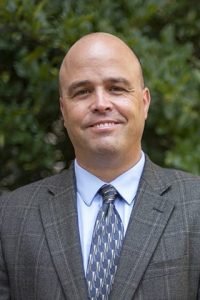 Please join us in congratulating Matthew Carpenter, Ph.D., of the Medical University of South Carolina, as our 2024 Cullen Award Recipient! Dr. Carpenter is a visionary thinker and key opinion leader within the field of nicotine and tobacco research. He earned his Ph.D. in Clinical Psychology from the University of Vermont and currently serves as a Tenured Professor at the Medical University of South Carolina (MUSC). Dr. Carpenter is dedicated to researching tobacco use in various ways- from lab-based studies of craving and nicotine dependence to small and large-scale clinical trials for smoking cessation to public health policy for effective tobacco control. Dr. Carpenter’s research is vast and ever-expanding, and now includes clinical trials of e-cigarettes. The NIH has been continuously funding his research efforts since 2007- prior/current funding includes a Career Development Award (K23), multiple R01s and R21s (NCI & NIDA), and foundation grants, all as Principal Investigator. Throughout, Dr. Carpenter is keen on trainee development, encouraging a long line of trainees to develop their science (primary mentor for T32, F32, K07, K01, 2 K23s, 3 ACS, and various NIH LRP recipients) and progress in their professional careers. He has served on several NIH study sections- even serving as Chair on some. Since 2022, Dr. Carpenter has taken on a new role within the NIH CSR Advisory Council (CSRAC).
Overall, Dr. Carpenter has staunchly devoted his career to reducing the harm of premature diseases resulting associated with cigarette addiction, and we are delighted to extend this honor.
Both recipients will be presented with their awards at ASPO’s 2024 Annual Meeting in Chicago.


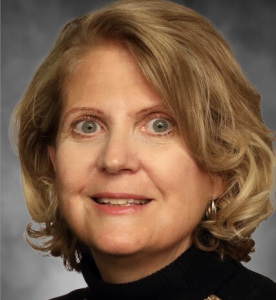 Wendy Demark-Wahnefried, PhD, RD is an outstanding candidate for the ASPO Joseph F. Fraumeni, Jr. Distinguished Achievement Award given her significant and long-term scientific contributions across the cancer continuum. A nutrition scientist by training, Dr. Demark-Wahnefried began her career studying weight gain among women with breast cancer and was one of the first to document sarcopenic obesity with chemotherapy (JCO 2001). She conducted proof-of-principal studies that promoted high-nutrient, low energy density diets combined with aerobic and resistance training to reverse adverse body composition change. Achieving success, Dr. Demark-Wahnefried then focused on interventions that were grounded in behavioral theory, home-based, scalable, and aimed at mitigating outcomes associated with accelerated aging among cancer survivors. Initially using tailored mailed print interventions with or without telephone counseling, the FRESH START and RENEW randomized controlled trials (RCT) achieved significant, reproducible, and durable improvements in dietary intake and physical activity, and functional decline in international and sizable (>500) samples of cancer survivors (JCO 2007, JAMA 2009, JCO 2012). Partnering with Cooperative Extension, Harvest for Health, a statewide, home-based, vegetable gardening intervention delivered by master gardeners paired with 381 older cancer survivors will soon yield findings aimed to enhance health of survivors residing in rural areas. Her AMPLIFY (AiM, Plan and act on LIFestYles) web-based, diet and exercise, weight loss RCT is recruiting survivors of obesity-related cancers. Along with RCTs in the presurgical setting and measuring effects on tumor proliferation have yielded ~350 peer-reviewed articles. She has led efforts to disseminate best practices for lifestyle behaviors among cancer survivors including several notable policy-related papers (CA Cancer J Clin 2012, 2018; Med Sci Sports Exerc, 2010; J Natl Compr Canc Netw 2020,2021; J Clin Oncol 2022). Dr. Demark-Wahnefried is devoted to service, chairing various committees including the National Cancer Policy Forum, the World Cancer Research Fund/American Institute of Cancer Research, and ASPO, where she served on several program planning committees, director-at-large, and president (2013-2015).
 The Joseph W. Cullen Memorial Award is to recognize an individuals distinguished achievement in continued national tobacco control efforts, through research, through the development of prevention and cessation programs with wide-reaching public health impact, or through public policy and advocacy initiatives. We are happy to announce the 2023 award will be presented to
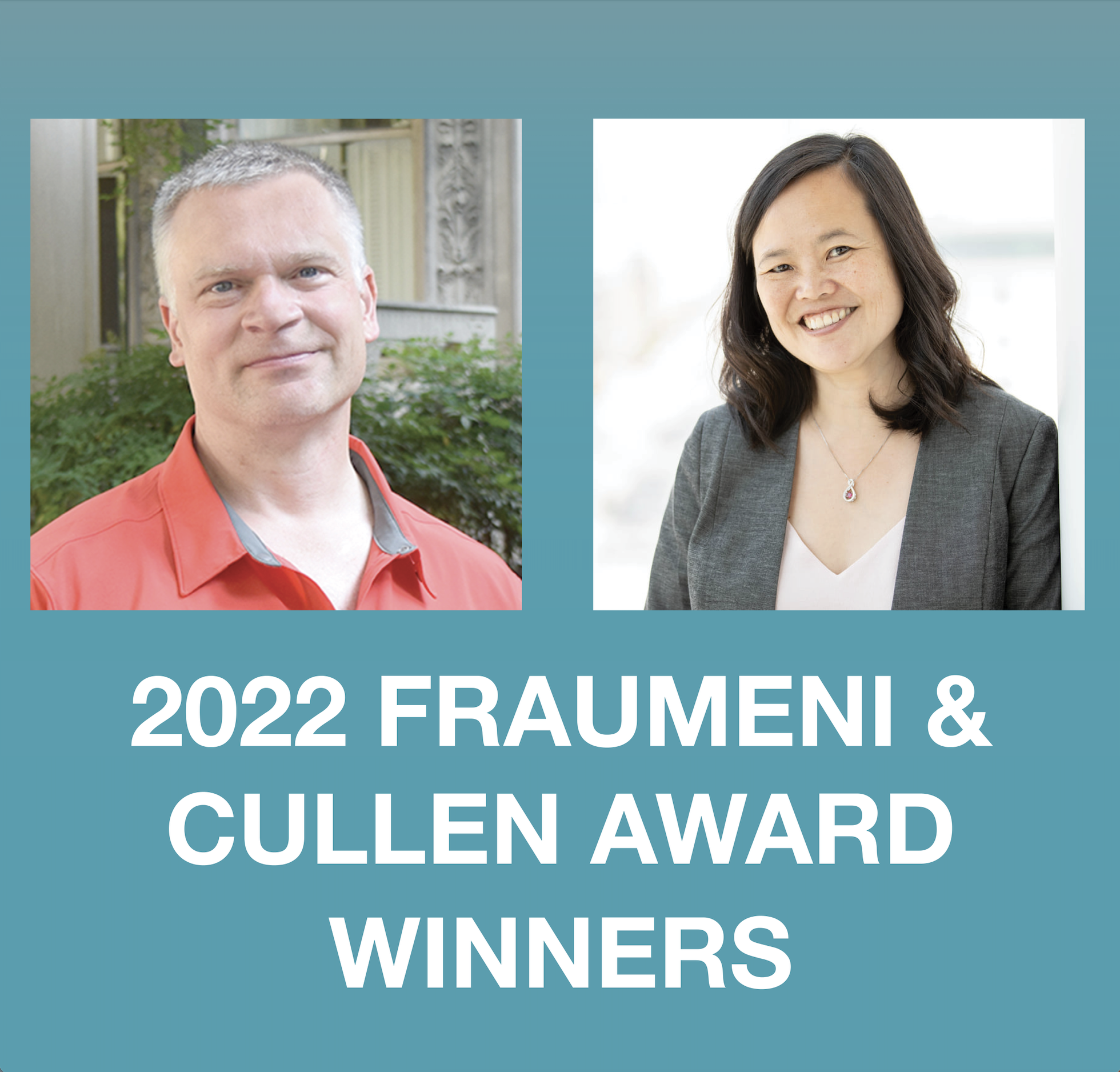
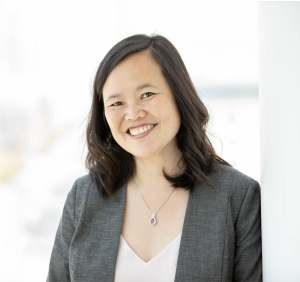 Dr. Gomez has over 20 years of experience as an epidemiologist with research interests in the role of social determinants of health, including race/ethnicity, socioeconomic status, gender, immigration status, sociocultural factors, and neighborhood contextual characteristics, on health outcomes. She is Director of the Greater Bay Area Cancer Registry, a part of the California Cancer Registry and the NCI Surveillance Epidemiology End Results (SEER) Program. She has contributed surveillance data regarding cancer incidence and outcome patterns and trends for distinct Asian American, Native Hawaiian, and Pacific Islander and Hispanic ethnic groups, as well as cancer patterns by nativity status and neighborhood characteristics. She developed the California Neighborhoods Data System, a compilation of small-area level data on social and built environment characteristics and has used these data in more than a dozen funded studies to evaluate the impact of social and built neighborhood environment factors on disease outcomes. Her publications demonstrating the substantial heterogeneity in cancer patterns across Asian American groups are often cited as the reasons for the importance of disaggregating cancer data for this diverse population. In fact, it is because of Dr. Gomez’ efforts and advocacy that we have gained an appreciation of the substantial heterogeneity among Asians and Pacific Islanders. In addition, she coined the concept of “ethnic enclaves,” which refers to neighborhoods with high proportions of the racial/ethnic group of interest. Through the application of this concept, scientists can assess the role of racial/ethnic enclave neighborhoods as predictors of cancer risk and outcomes. Dr. Gomez’s work in neighborhood contextual research has inspired and motivated a new generation of cancer research and development of novel methodologic approaches for studies in neighborhoods and cancer.
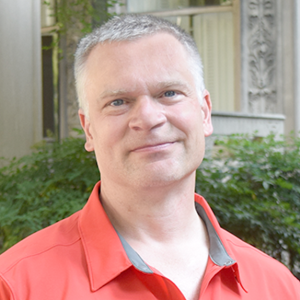 Dr. Eissenberg began exploring methods to assess the effects of novel tobacco products in 1999, was the first to publish a clinical lab study of e-cigarette effects (Eissenberg, 2010), and the Center for the Study of Tobacco Products (CSTP) team at Virginia Commonwealth University, which Dr. Eissenberg co-directs, was the first to characterize the product characteristics, toxicant output, and nicotine delivery of JUUL e-cigarettes. Dr. Eissenberg’s significant achievements in national and international tobacco control are evidenced by 200+ publications in the past 8 years from members of the CSTP scientific team he leads. Over the past two decades, Dr. Eissenberg has been awarded over $50 million dollars in funds as principal investigator from the National Institutes of Health (NIH) to study tobacco products and has been funded continuously by NIH since 1997. He has nearly 300 publications, predominantly in the area of tobacco control, his h-index on Google scholar is 76, and he is recognized by Clarivate as a Highly Cited Researcher due to having multiple highly-cited papers that rank in the top 1% in Web of Science. Dr. Eissenberg is distinguished by his leadership in bringing together national and international scientists from chemistry, economics, engineering, medicine, public policy, public health, and psychology to generate high-impact and transformative transdisciplinary tobacco regulatory science that can impact federal policy on tobacco products. He has dedicated his career to facilitating safe and ethical research aimed at decreasing tobacco-caused death and disease as a past member of the FDA’s Tobacco Product Scientific Advisory Committee and of the DHHS Secretary’s Advisory Committee on Human Research Protections. Findings from his work are providing the scientific justification for several tobacco control regulatory policies under consideration including efforts to address menthol flavoring in e-liquids and regulating nicotine emissions from e-cigarette devices. In addition, he has been a generous educator who has mentored numerous junior faculty, postdoctoral fellows and graduate students, 9 of whom have competed successfully for NIH F31 funding.




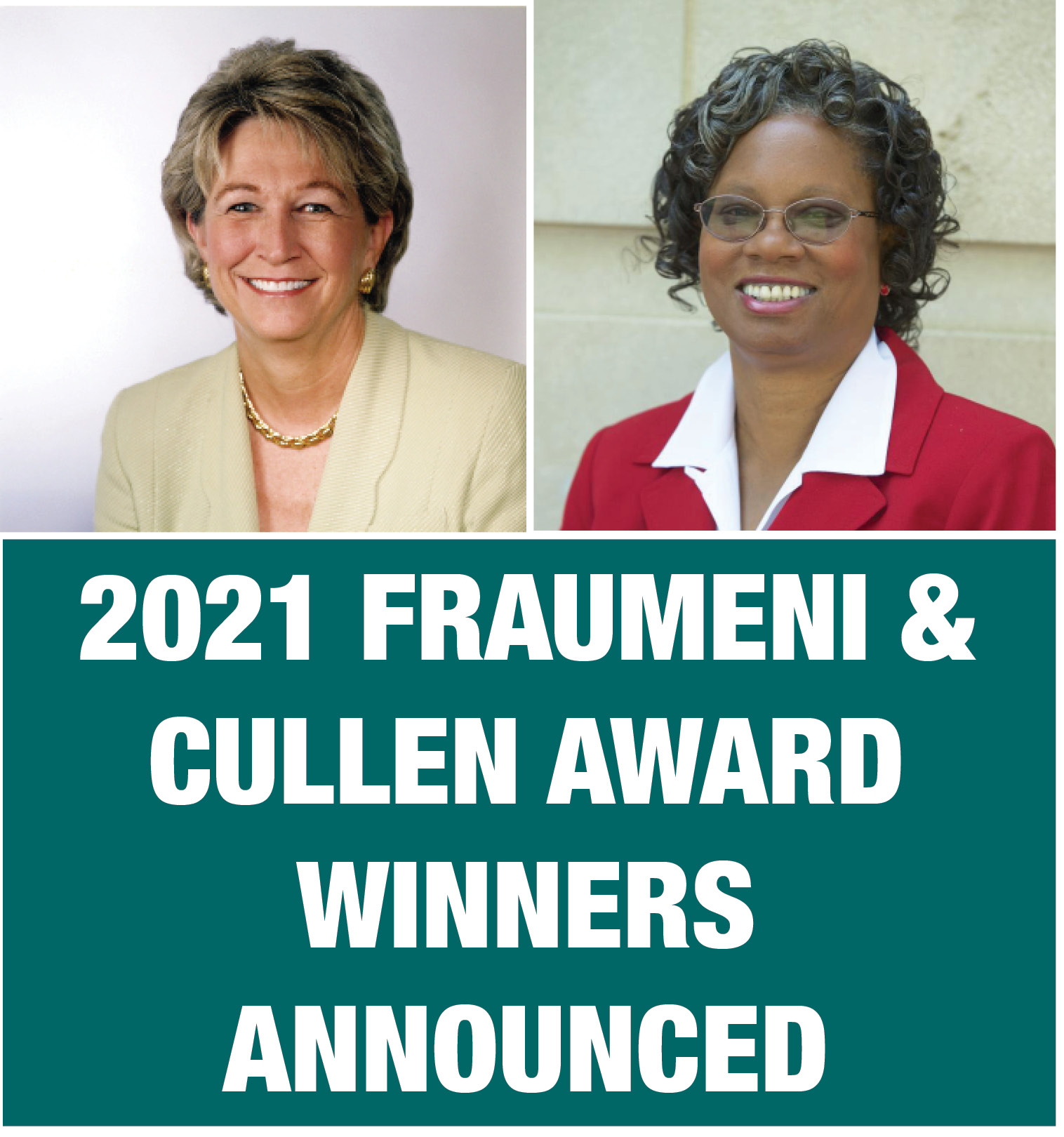
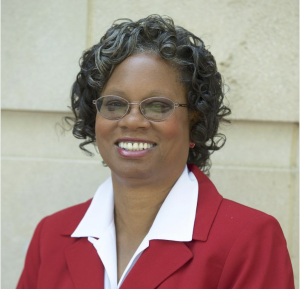 Lucile was the first African-American woman to receive a PhD in epidemiology in the United States, and in 1995 when she directed the Howard University Cancer Center she was the only African-American woman to lead any cancer institute. She is currently the Associate Director of Minority Health & Health Disparities Research, Senior Associate Dean for Community Outreach and Engagement, and Professor of Oncology at Lombardi Comprehensive Cancer Center at Georgetown University Medical Center. Dr. Adams-Campbell has dedicated her career to studying cancer disparities experienced by African-Americans. Her research uses clinical trials, cancer epidemiology and etiology along with lifestyle interventions to elucidate the cancer risk in African-Americans and has led to over 200 peer-reviewed publications and international recognition as an expert in minority health and health disparities research.
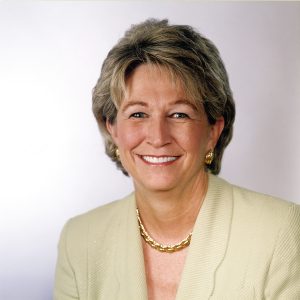 Bo has unequivocally demonstrated an unyielding commitment to tobacco control efforts by enabling innovative research and spearheading public education, policy and advocacy initiatives. Her strong leadership, like Dr. Cullen’s, exemplifies a commitment to fostering collaboration among scientists, health care professionals, and public health advocates involved in the struggle against tobacco and tobacco-related diseases.